



















Home / Procedures / Lower blepharoplasty

Lower blepharoplasty (lower eyelid surgery)

Lower blepharoplasty (lower eyelid surgery, eye bag surgery) treats bags under the eyes by removing or repositioning the orbital fat that bulges below the eye, and by removing excess skin when present. It is done mainly for appearance, for adults who see bags or circles under the eyes, a tired look or a flattened face.

Medical illustrations

Labelled. The numbers match the key.

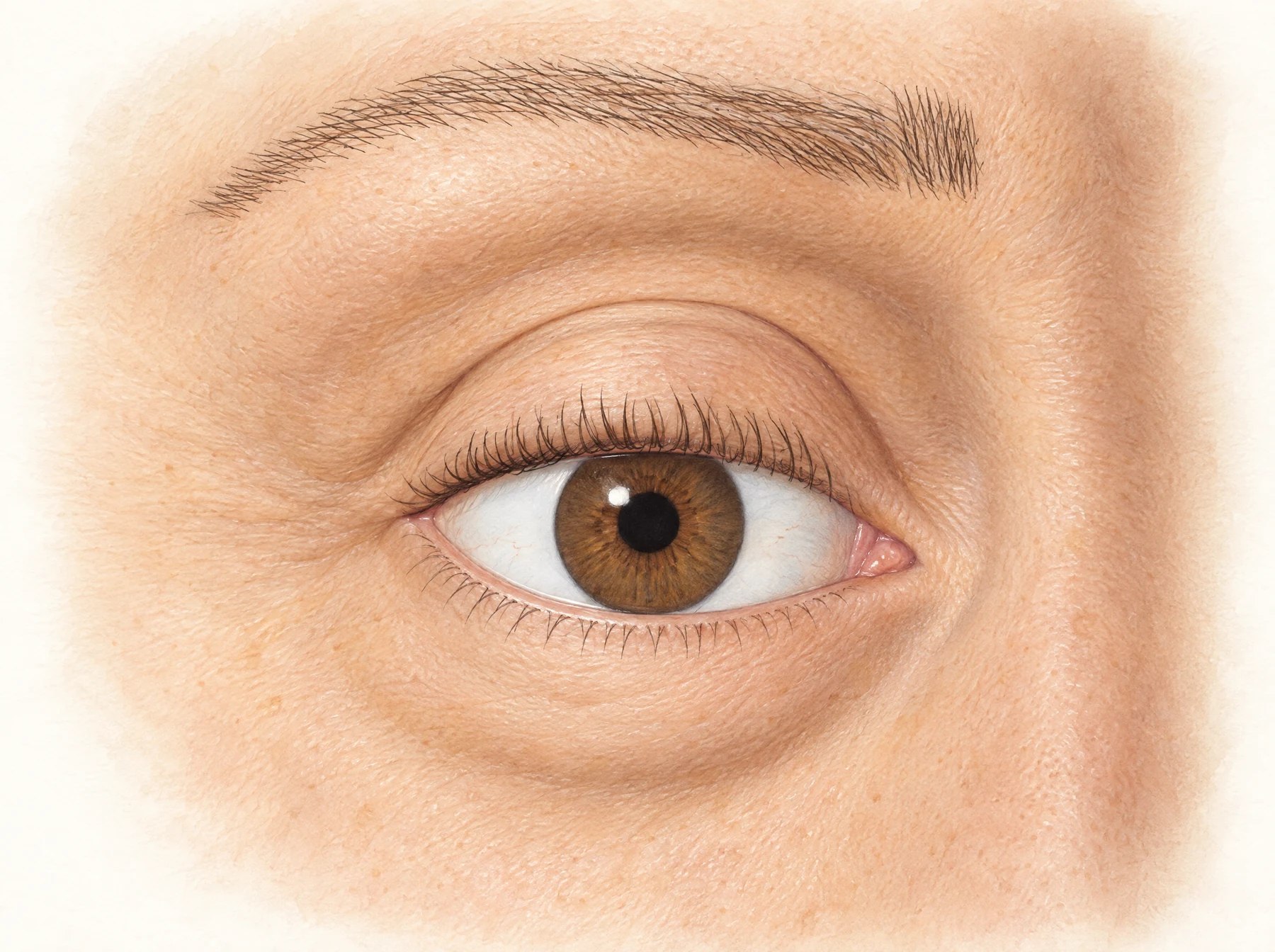
Medical illustration of the right eye region of a woman about 55 seen from the front: eyebrow, upper eyelid crease with mild hooding of the outer fold, lid margins and lashes, the inner corner with the caruncle, the slightly higher outer corner, lower lid fullness, tear trough and lid-cheek junction.

Eyelid surface landmarks

The right eye of a woman in her mid-fifties, showing the brow, the upper lid crease and fold, the corners of the eye, the tear trough and the lid-cheek junction.

  1. Eyebrow
  2. Upper eyelid crease
  3. Upper eyelid skin fold
  4. Upper eyelid margin and lashes
  5. Lateral canthus
  6. Medial canthus
  7. Caruncle
  8. Lower eyelid margin
  9. Lower eyelid
  10. Tear trough
  11. Lid-cheek junction
  12. Cheek
  13. Iris
  14. Pupil
  15. Sclera

Anatomy checked against StatPearls. Anatomy, Head and Neck: Eyelid, StatPearls. Blepharoplasty, StatPearls. Blepharoplasty, Lower Lid, Canthal Support, Wong CH et al. The tear trough ligament: anatomical basis for the tear trough deformity. Plast Reconstr Surg 2012, Muzaffar AR et al. Surgical anatomy of the ligamentous attachments of the lower lid and lateral canthus. Plast Reconstr Surg 2002.

Every eyelid illustration

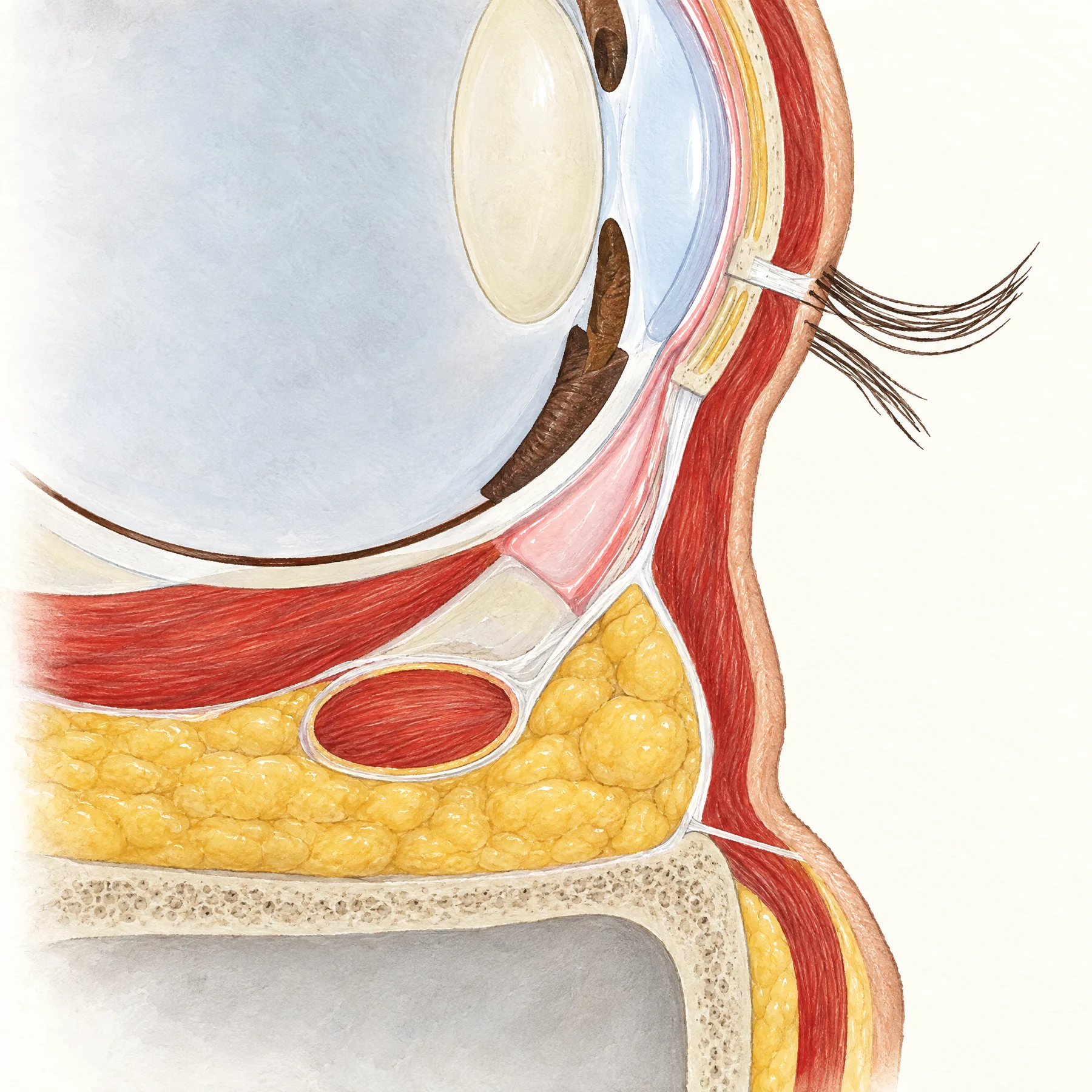
Medical illustration of the lower eyelid cut from top to bottom through the pupil, face to the right: skin, orbicularis muscle, the short lower tarsus, orbital septum, central fat pad, capsulopalpebral fascia, inferior oblique and inferior rectus muscles, conjunctival fornix, orbital rim, orbicularis retaining ligament and cheek fat.

Lower eyelid cross-section

Cross-section of the closed lower eyelid through the middle of the pupil, from the lashes down to the cheek.

  1. Skin
  2. Orbicularis oculi, pretarsal part
  3. Tarsus with meibomian glands
  4. Eyelashes
  5. Orbicularis oculi, preseptal part
  6. Capsulopalpebral fascia (lower lid retractor)
  7. Orbital septum
  8. Central fat pad
  9. Conjunctiva
  10. Inferior conjunctival fornix
  11. Inferior oblique muscle
  12. Inferior rectus muscle
  13. Orbital fat
  14. Orbital floor (maxilla)
  15. Maxillary sinus
  16. Inferior orbital rim
  17. Orbicularis retaining ligament
  18. Lid-cheek junction
  19. Suborbicularis oculi fat (SOOF)
  20. Orbicularis oculi, orbital part
  21. Subcutaneous fat
  22. Cornea
  23. Iris
  24. Lens
  25. Upper eyelid

Anatomy checked against StatPearls. Anatomy, Head and Neck: Eyelid, Hwang K. Surgical anatomy of the lower eyelid relating to lower blepharoplasty. Anat Cell Biol 2010, Hawes MJ, Dortzbach RK. The microscopic anatomy of the lower eyelid retractors. Arch Ophthalmol 1982, Kakizaki H et al. Lower eyelid anatomy: an update. Ann Plast Surg 2009, Kawakita T et al. Measurement of fornix depth and area. Eye 2009, Muzaffar AR et al. Surgical anatomy of the ligamentous attachments of the lower lid and lateral canthus. Plast Reconstr Surg 2002, Aiache AE, Ramirez OH. The suborbicularis oculi fat pads: an anatomic and clinical study. Plast Reconstr Surg 1995, Gray's Anatomy (1918), fig. 891: sagittal section of the orbit.

Every eyelid illustration

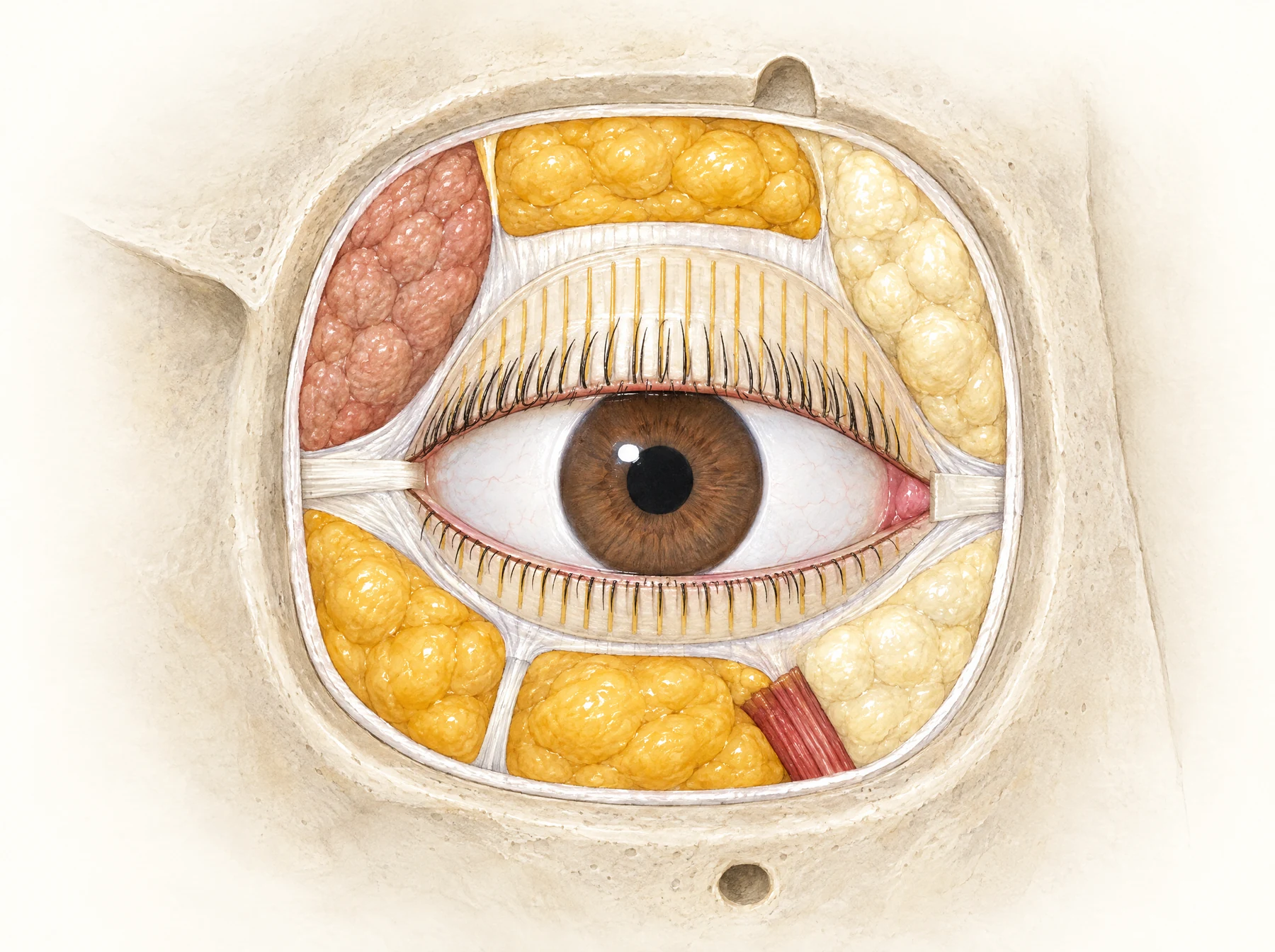
Medical illustration of the right eye region from the front with skin and muscle removed: the lacrimal gland, the central and nasal fat pads of the upper eyelid, the lateral, central and medial fat pads of the lower eyelid with the inferior oblique muscle between the medial and central pads, the tarsal plates and canthal tendons, framed by the bony orbital rim.

Orbital fat pads, front view

The right eye from the front with the skin and orbicularis removed and the orbital septum opened, showing the fat pads of the upper and lower eyelids.

  1. Lacrimal gland
  2. Central fat pad, upper eyelid
  3. Nasal fat pad, upper eyelid
  4. Levator aponeurosis
  5. Upper tarsus with meibomian glands
  6. Lateral canthal tendon
  7. Medial canthal tendon
  8. Caruncle
  9. Lower tarsus
  10. Lateral fat pad, lower eyelid
  11. Central fat pad, lower eyelid
  12. Medial fat pad, lower eyelid
  13. Inferior oblique muscle
  14. Arcuate expansion
  15. Cut edge of the orbital septum
  16. Supraorbital notch
  17. Infraorbital foramen
  18. Lateral orbital rim
  19. Iris
  20. Sclera

Anatomy checked against StatPearls. Anatomy, Head and Neck: Eyelid, StatPearls. Blepharoplasty, StatPearls. Transconjunctival Blepharoplasty, Hwang K. Surgical anatomy of the lower eyelid relating to lower blepharoplasty. Anat Cell Biol 2010, Massry GG. Prevalence of lacrimal gland prolapse in the functional blepharoplasty population. Ophthalmic Plast Reconstr Surg 2011, Gray's Anatomy (1918), fig. 894: tarsi and their ligaments.

Every eyelid illustration

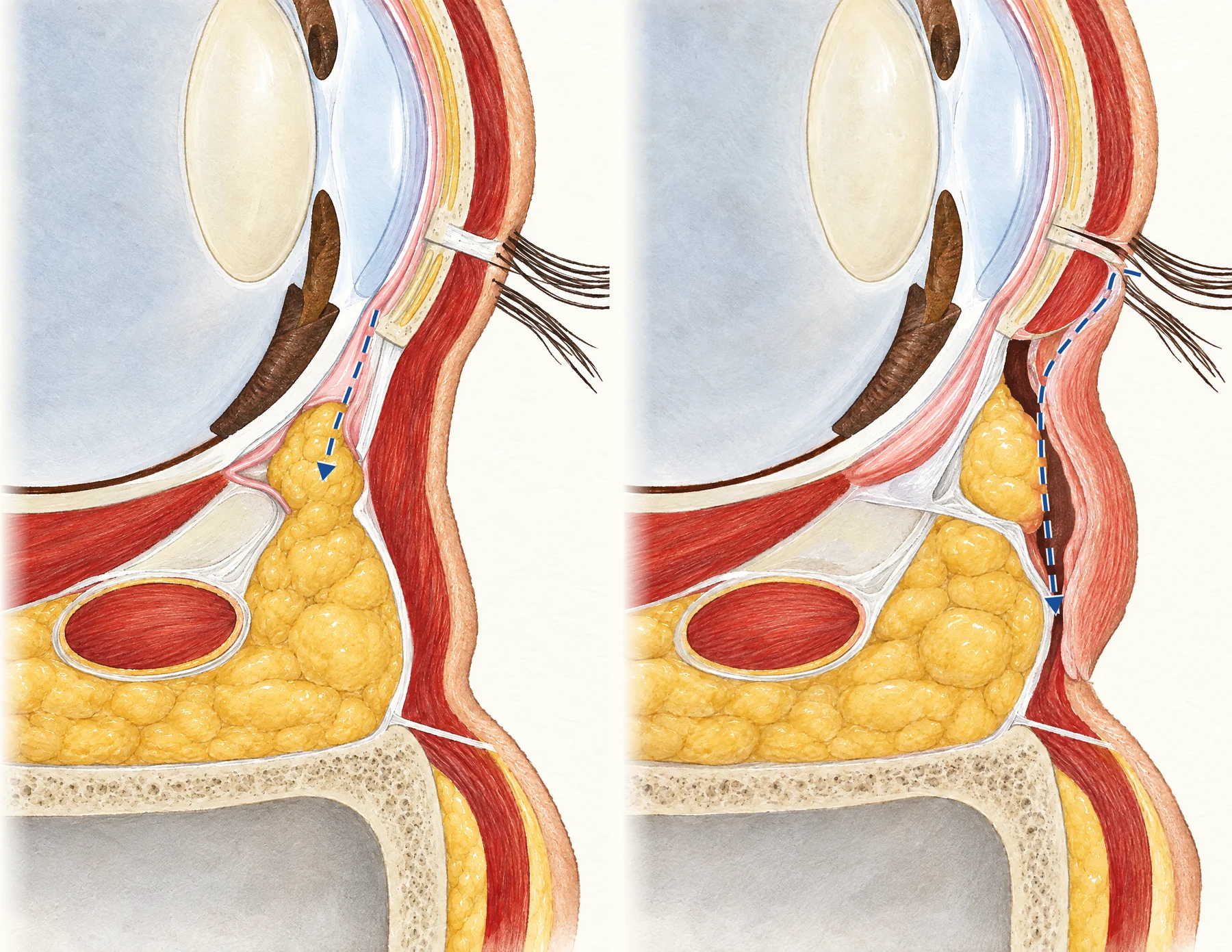
Two side-section medical illustrations of the lower eyelid, face to the right. Left: the conjunctiva and lower lid retractors are opened on the inner surface of the lid and the central fat pad bulges through, with the skin, orbicularis and septum untouched. Right: a skin incision just below the lashes, a strip of pretarsal orbicularis kept, the skin and muscle lifted as one flap off the septum down to the rim, and the septum opened over the fat. Dashed arrows show each route.

Lower blepharoplasty approaches

The lower eyelid fat is reached either through the inside of the lid (left, transconjunctival) or through a skin incision just below the lashes (right, subciliary).

  1. Transconjunctival incision
  2. Central fat pad
  3. Orbital septum, not opened
  4. Skin and orbicularis, not cut
  5. Lower tarsus
  6. Inferior oblique muscle
  7. Subciliary skin incision
  8. Pretarsal orbicularis, preserved
  9. Skin-muscle flap
  10. Plane in front of the septum
  11. Orbital septum, opened
  12. Central fat pad

Anatomy checked against StatPearls. Transconjunctival Blepharoplasty, StatPearls. Blepharoplasty Subciliary Approach, StatPearls. Anatomy, Head and Neck: Eyelid, Hwang K. Surgical anatomy of the lower eyelid relating to lower blepharoplasty. Anat Cell Biol 2010.

Every eyelid illustration

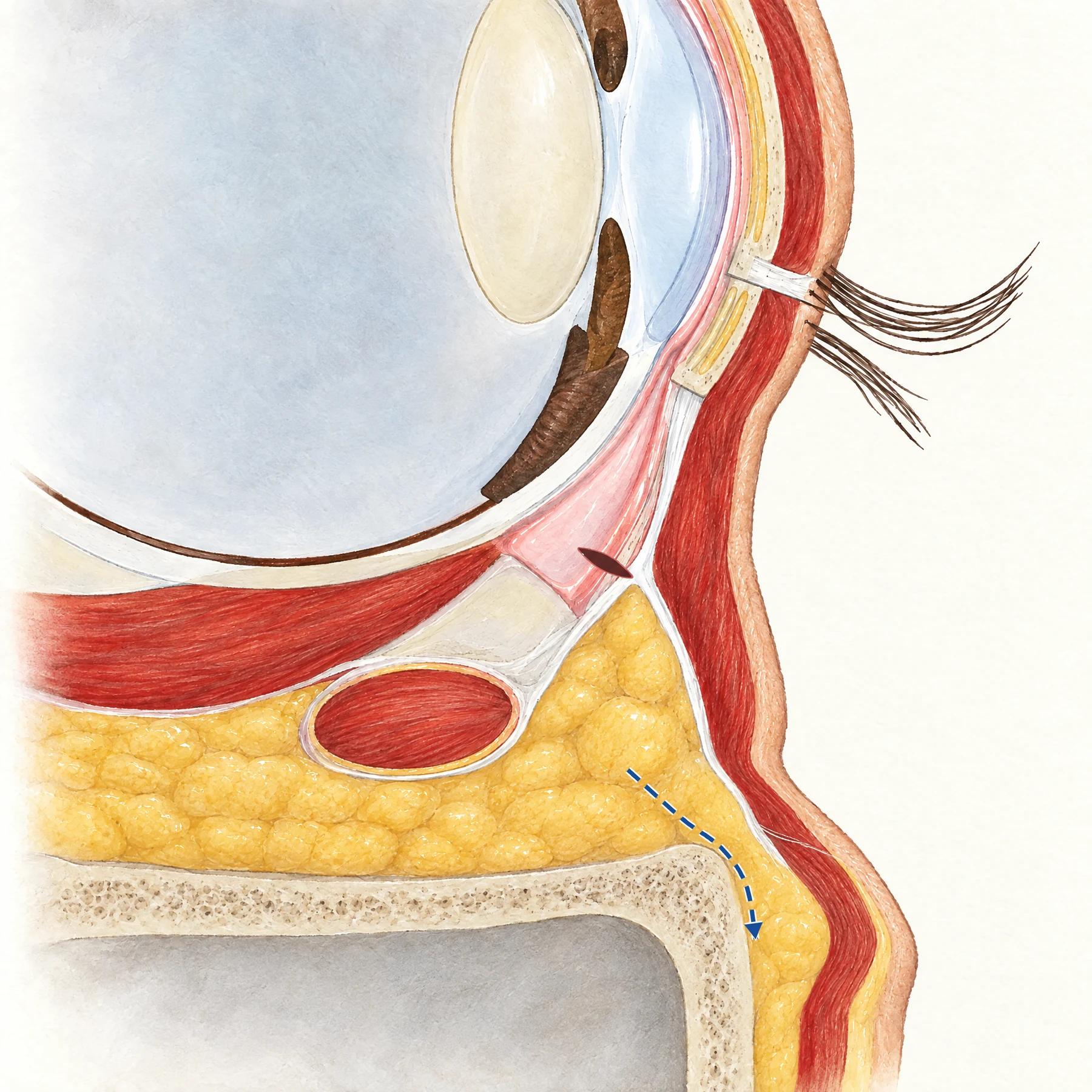
Medical illustration of the lower eyelid cut from top to bottom through the pupil, face to the right, after fat repositioning: a small incision in the conjunctiva inside the lid, the central fat pad continuing as one tongue of fat over the inferior orbital rim onto the front of the maxilla under the orbicularis muscle, and the orbital septum ending free in front of the fat. A dashed arrow shows the path of the fat.

Fat repositioning

Cross-section of the lower eyelid after fat repositioning: through an incision inside the lid, the orbital septum is released from the bony rim and a tongue of eyelid fat, still attached at its base, is moved over the rim onto the cheekbone.

  1. Transconjunctival incision
  2. Central fat pad
  3. Fat moved over the orbital rim
  4. Orbital septum, released from the rim
  5. Inferior orbital rim
  6. Maxilla
  7. Orbicularis oculi muscle
  8. Orbicularis retaining ligament
  9. Skin
  10. Lower tarsus
  11. Inferior oblique muscle
  12. Conjunctiva
  13. Maxillary sinus

Anatomy checked against Hamra ST. Arcus marginalis release and orbital fat preservation in midface rejuvenation. Plast Reconstr Surg 1995, Goldberg RA. Transconjunctival orbital fat repositioning: transposition of orbital fat pedicles into a subperiosteal pocket. Plast Reconstr Surg 2000, StatPearls. Transconjunctival Blepharoplasty, Hwang K. Surgical anatomy of the lower eyelid relating to lower blepharoplasty. Anat Cell Biol 2010, Muzaffar AR et al. Surgical anatomy of the ligamentous attachments of the lower lid and lateral canthus. Plast Reconstr Surg 2002.

Every eyelid illustration

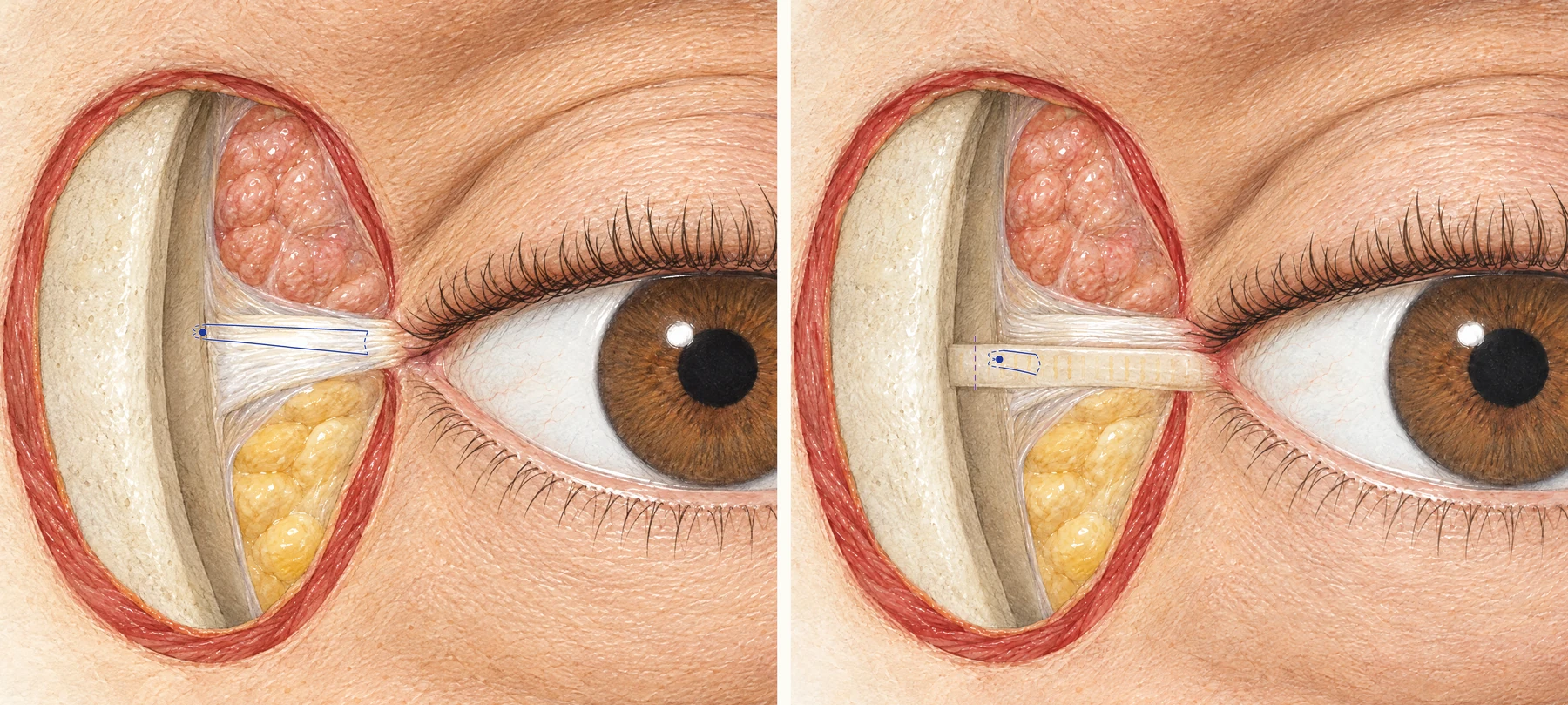
Two-panel medical illustration of the outer corner of a right eye from the front, with the skin and orbicularis muscle opened beside the eye to show the lateral orbital rim, the lacrimal gland and the lateral fat pad. Left: a blue stitch passes through the white lateral canthal tendon and is tied to the periosteum on the inner surface of the rim. Right: after a cut at the outer corner, a strip of lower eyelid tarsus runs to the inner surface of the rim, where a blue stitch fixes it, with a dashed line marking the excess to be trimmed; the upper part of the canthal tendon is intact.

Canthopexy and canthoplasty

Two ways to tighten the outer corner of the eye. Left, canthopexy: the lateral canthal tendon stays attached and is stitched to the periosteum on the inner side of the bony orbital rim. Right, canthoplasty with a lateral tarsal strip: the corner is divided, the outer end of the lower eyelid tarsus is cut into a strip, shortened and stitched to the same spot inside the rim.

  1. Lateral orbital rim
  2. Inner surface of the orbital rim
  3. Lateral canthal tendon
  4. Suture from the tendon to the periosteum inside the rim
  5. Lacrimal gland
  6. Lateral fat pad, lower eyelid
  7. Orbicularis oculi, cut edge
  8. Lateral canthus
  9. Tarsal strip from the lower eyelid
  10. Upper limb of the lateral canthal tendon
  11. Trim line on the excess strip
  12. Suture from the strip to the periosteum inside the rim
  13. Canthotomy

Anatomy checked against StatPearls. Blepharoplasty, Lower Lid, Canthal Support, Anderson RL, Gordy DD. The tarsal strip procedure. Arch Ophthalmol 1979, Muzaffar AR et al. Surgical anatomy of the ligamentous attachments of the lower lid and lateral canthus. Plast Reconstr Surg 2002, StatPearls. Anatomy, Head and Neck: Eyelid.

Every eyelid illustration

See the work

Surgeons whose own sites show lower blepharoplasty: before-and-after photographs first. Choose your state for the surgeons near you.

Surgeons by stateAlabamaAlaskaArizonaArkansasCaliforniaColoradoConnecticutDelawareDistrict of ColumbiaFloridaGeorgiaHawaiiIdahoIllinoisIndianaIowaKansasKentuckyLouisianaMaineMarylandMassachusettsMichiganMinnesotaMississippiMissouriMontanaNebraskaNevadaNew HampshireNew JerseyNew MexicoNew YorkNorth CarolinaNorth DakotaOhioOklahomaOregonPennsylvaniaRhode IslandSouth CarolinaSouth DakotaTennesseeTexasUtahVermontVirginiaWashingtonWest VirginiaWisconsinWyoming

Oculoplastic surgeon
Austin, Texas
See the before and after
Oculoplastic surgeon
Tampa, Florida
See the before and after
Plastic surgeon
Houston, Texas
See the before and after
Facial plastic surgeon
Aliso Viejo, California
See the before and after
Plastic surgeon
Tysons Corner, Virginia
See the before and after
Plastic surgeon
Los Angeles, California
See the before and after
Oculoplastic surgeon
Aventura, Florida
See the before and after
Oculoplastic surgeon
Bellaire, Texas
See the before and after
Plastic surgeon
New York, New York
See the before and after
Plastic surgeon
Beverly Hills, California
See the before and after
Oculoplastic surgeon
Scottsdale, Arizona
See the before and after
Oculoplastic surgeon
Little Rock, Arkansas
See the before and after

What lower blepharoplasty costs

Self-pay prices, and what insurance pays when the operation is covered.

Published prices
$6,250

Most practices that publish a price for it charge between $5,000 and $7,650.

Average surgeon fee
$3,876

From the American Society of Plastic Surgeons, before anesthesia and the operating room.

What eyelid surgery costs, in full · Prices in your state are on your state's page.

What eye bag surgery treats

  • Eye bag removal: the surgeon removes or repositions the bulging orbital fat, as described under How it is done; the causes of bags are in Eye bags and lower eyelid bags (PMID 37531619).
  • Aging of the lower lid combines excess skin, bulging fat, tear trough hollowing and a sinking midface; weakening of the lid's supporting structures lets the fat pads bulge (PMID 39585706).
  • The lower lid has a less favorable complication profile than the upper lid (PMID 39585706).
  • The aging contour is both fat bulging and cheek descent, which exposes the orbital rim and deepens the tear trough (PMID 10697189).
  • Removing lower lid fat can leave a hollow contour, the "operated" look (PMID 7624408).
  • Surgeons who belong to the American Society of Ophthalmic Plastic and Reconstructive Surgery perform lower lid and four-lid blepharoplasty regularly through the year (PMID 28151825).

How it is done

Approach

  • Transconjunctival: the incision is inside the lid, so there is no skin scar; a classic series reported no lid retraction or ectropion, and the main problem was fat left behind in about 1 in 14 (PMID 2771349).
  • Transcutaneous (subciliary): the incision is below the lashes and a skin-muscle flap is raised; a left-right comparison found both approaches looked the same at 6 months (PMID 7568479).
  • Skin pinch: loose skin is excised without undermining; about 8 mm of skin was removed on average, and temporary white-of-the-eye show occurred in a few patients (PMID 18434828).
  • Adding a skin pinch to transconjunctival surgery did not change lid height (PMID 18209632).
  • Among eyelid plastic surgeons, nearly all use the transconjunctival approach, most also use the transcutaneous approach, nearly all excise fat, 4 in 5 reposition fat, and nearly all support the outer corner of the lid (PMID 28151825).

Fat excision or fat repositioning

  • Arcus marginalis release: the surgeon releases the septum at the orbital rim and advances the lower lid fat over the rim (PMID 7624408).
  • Transconjunctival fat repositioning: fat pedicles are moved into a pocket on the cheekbone; some of the fat resorbs to a variable degree (PMID 10697189).
  • Septal reset: the orbital septum itself is reset over the rim, which gives the lid a firmer undersurface than fat transposition alone (PMID 15253208).
  • Five-step technique: deep cheek fat is augmented, the muscle is preserved, little or no fat is removed, the ligament at the lid-cheek junction is released, the outer corner is supported and minimal skin is removed; no lower lid malposition was reported (PMID 21278622).
  • Fat removal followed by grafting the removed fat into the tear trough left nearly all patients satisfied (PMID 30418468).
  • Minced free fat graft and pedicle fat flap gave similar complications and satisfaction, with reoperation about 1 in 17 against about 1 in 8 (PMID 37463504).
  • Deep fat excision with a septum-fat flap through the skin fully corrected bags and tear trough in about 9 in 10 patients (PMID 41051496).
  • A skin-approach technique with a capsulopalpebral fascia incision and selective omission of canthoplasty produced no ectropion or other major complication (PMID 40952103).

Instruments and anatomy

  • CO2 laser caused less chemosis than monopolar cautery in a randomized comparison (PMID 36723988).
  • A nerve safe zone for the muscle incision lies about 6 mm below the lid margin; incising there preserves the nerve supply and prevents pretarsal atrophy (PMID 37384881).

Results and evidence

  • Across published series, reoperation after lower blepharoplasty is under 1%, and scleral show, lid malposition and ectropion are each under 0.4% (PMID 30084870).
  • Photographs beyond 2 years are rare in the literature, so long-term durability is poorly documented (PMID 30084870).
  • In a randomized comparison of traditional lower blepharoplasty and fat transposition, both with canthopexy, nearly all patients improved on photographs and self-esteem scores improved at 6 months (PMID 22124642).
  • Extended transconjunctival blepharoplasty with ligament release and free fat grafts produced no scleral show at about 2 years; fat necrosis occurred in about 1 in 30 and revision in about 1 in 100 (PMID 41150997).
  • Transcutaneous blepharoplasty with orbicularis suspension left lid position unchanged from before surgery, with no ectropion, revision in about 1 in 80 and nearly all patients satisfied (PMID 41677016).
  • A negative canthal tilt before surgery was associated with scleral show afterward (PMID 41677016).
  • After deep fat excision, patients rated their lower eyelid appearance much better and were perceived as about 3 years younger (PMID 41051496).
  • Fat excision or transposition is safe through either incision; transposition is probably easier through the skin; reviewers found outcome reporting too weak to name a best approach (PMID 41415593).
  • A systematic review found no major complications with visual disturbance, and most complications resolved with conservative care or revision (PMID 40995580).

Risks and complications

  • Conventional lower blepharoplasty with fat removal through the septum carries a reported lower lid malposition rate of about 15% to 20% (PMID 18434828).
  • Repair of lower lid retraction after blepharoplasty depends on time since surgery, globe prominence and septal or skin involvement (PMID 1390423).
  • Subtle retraction and eversion after a skin pinch or laser resurfacing can be missed by standard measurement and were prevented by resuspending the outer corner (PMID 31444052).
  • Fat grafting and repositioning for tear trough or lid-cheek junction carry about 1 in 9 overall complications; contour irregularity or undercorrection and bruising or swelling are each about 1 in 16, and reoperation is about 1 in 40 (PMID 39158343).
  • Strabismus (eye misalignment) diagnosed within 3 years occurs in about 2% after lower blepharoplasty against 1.5% after upper blepharoplasty (PMID 38346431).
  • Persistent chemosis was more frequent after transcutaneous surgery with lateral canthoplasty than after transconjunctival surgery, and more frequent with radiofrequency (PMID 38610858).
  • Orbital hemorrhage after cosmetic eyelid surgery is about 1 in 2,000, and permanent visual loss about 1 in 20,000 (PMID 15599241).
  • Hypertrophic scars after cosmetic eyelid surgery are uncommon, and no keloid was reported (PMID 36797842).
  • Methods to prevent ectropion include Frost sutures, periosteal anchoring, barbed sutures and splinting; evidence quality is low, and one study found no benefit from Frost sutures (PMID 40907566).

Recovery

  • Subcutaneous tranexamic acid in eyelid surgery reduced bruising on day 0 and at 1 week, and most patients saw less bruising on the treated side (PMID 38624153).
  • Botulinum toxin into the outer orbicularis at closure narrowed subciliary scars (PMID 34128526).
  • After fat repositioning, the fixation suture comes out after 3 to 5 days, and texture and contour settle over 1 to 2 months (PMID 10697189).
  • Swelling and pronounced chemosis occurred in a few patients who had orbicularis suspension, canthopexy or canthoplasty with a pinch blepharoplasty (PMID 18434828).
  • Orbital hemorrhage is most likely in the first 3 hours after surgery (PMID 15599241).

Combined procedures

  • Hamra performed arcus marginalis release with fat preservation in all composite facelifts, and in isolated blepharoplasty for patients without advanced facial aging (PMID 7624408).
  • The septal reset was added to composite facelift after orbicularis repositioning and fat transposition (PMID 15253208).
  • Blepharoplasty is the most common procedure added to a facelift, and combined procedures raised the odds of adverse events (PMID 32459769).
  • Midface lift through a skin-muscle flap increased tear trough volume whether fat was left alone, repositioned or removed (PMID 36719989).
  • Transconjunctival deep-plane midface lift produced no significant complications over about 5 years; patients with heavy excess skin or festoons were advised traditional techniques (PMID 22859542).
  • Facelift approach can be chosen by the degree of midface sagging, with transconjunctival blepharoplasty plus skin pinch or fat transposition as the lower lid options (PMID 33657627).
  • Blending the lid-cheek junction uses fat conservation, fat augmentation, fat repositioning, ligament release, septal reset and deep cheek filler (PMID 29787515).

Current questions

  • Approach for fat preservation: both incisions are safe, and a 2025 review found outcome reporting too weak to name a best approach (PMID 41415593).
  • Pedicle transposition or free fat graft: equal outcomes in a direct comparison (PMID 37463504); free grafts from removed fat gave fat necrosis in about 1 in 30 (PMID 41150997).
  • Routine or selective canthal support: one large series omitted canthoplasty selectively without ectropion (PMID 40952103); canthal surgery was linked to persistent chemosis (PMID 38610858); routine canthopexy maintained canthal position (PMID 31985628).
  • Durability: long-term photographic follow-up is rare (PMID 30084870).
  • Strabismus after lower blepharoplasty is more frequent than after upper blepharoplasty in registry data (PMID 38346431).

Terms

  • Transconjunctival approach: incision on the inner surface of the lower lid, no skin scar (PMID 2771349).
  • Transcutaneous (subciliary) approach: incision just below the lashes with a skin-muscle flap (PMID 7568479).
  • Skin pinch: removal of a fold of loose lid skin without undermining (PMID 18434828).
  • Arcus marginalis: the attachment of the orbital septum at the bony rim, released to move fat over the rim (PMID 7624408).
  • Fat repositioning (transposition): moving orbital fat on its pedicle over the rim instead of removing it (PMID 10697189).
  • Septal reset: advancing the orbital septum over the rim to smooth the lid-cheek junction (PMID 15253208).
  • Orbicularis retaining ligament: the ligament that tethers the lid-cheek junction; released in some techniques (PMID 21278622).
  • Scleral show: white of the eye visible between iris and lower lid (PMID 41677016).
  • Ectropion: outward turning of the lower lid (PMID 40907566).
  • Chemosis: swelling of the conjunctiva (PMID 38610858).
  • MRD2: distance from the corneal light reflex to the lower lid margin (PMID 18209632).

Lower blepharoplasty questions

How long do lower blepharoplasty results last?

Published series rarely show photographs beyond 2 years, so durability is poorly documented (PMID 30084870). The extended transconjunctival technique with free fat grafts showed no scleral show at about 2 years (PMID 41150997). Revision was needed in about 1 in 100 patients in that series (PMID 41150997).

Does insurance cover lower eyelid surgery?

Aetna rarely considers lower lid blepharoplasty medically necessary (Aetna CPB 0084). Noridian, the Medicare contractor for western states, treats lower blepharoplasty alone as cosmetic (CMS LCD L34194). Palmetto covers lower lid surgery as reconstructive for ectropion or entropion that injures the eye surface (CMS LCD L34411). Palmetto also covers lid edema from a named systemic disease that does not respond to medical care (CMS LCD L34411).

Does lower blepharoplasty leave a scar?

The transconjunctival approach uses an incision inside the lid with no skin scar (PMID 2771349). The transcutaneous approach leaves an incision below the lashes (PMID 7568479). Hypertrophic scars after cosmetic eyelid surgery were uncommon, and no keloid was reported (PMID 36797842). Botulinum toxin injected into the outer orbicularis at closure narrowed subciliary scars (PMID 34128526).

Can lower blepharoplasty cause double vision?

Registry data found strabismus diagnosed within 3 years in about 2% of patients after lower blepharoplasty (PMID 38346431). The rate after upper blepharoplasty was 1.5% (PMID 38346431). A systematic review found no major complications with visual disturbance after lower eyelid blepharoplasty (PMID 40995580). Most complications in that review resolved with conservative care or revision (PMID 40995580).

Will lower blepharoplasty pull my lower eyelid down?

Conventional fat removal through the septum carries a reported lid malposition rate of about 15% to 20% (PMID 18434828). Pooled series put scleral show, malposition and ectropion each under 0.4% (PMID 30084870). Patients with a negative canthal tilt before surgery more often had scleral show afterward (PMID 41677016). Nearly all eyelid plastic surgeons support the outer corner of the lid during the operation (PMID 28151825).

Papers cited on this page

Newest first.

2026
Fat Repositioning with Deep Fat Excision in Transcutaneous Lower Blepharoplasty
Chen J, Li C, Zhang F, Wu Y, Wang Y, Li Q, et al. · Plast Reconstr Surg · PMID 41051496
2026
Assessment of Eyelid Positioning with the Transcutaneous Lower Blepharoplasty Surgical Approach: A Single-Surgeon Experience
Espinosa-Reyes JA, Ochoa Alvarez JC, Cobo-Sefair R, Heredia-Combariza N, Henao F, Zamora C · Facial Plast Surg Aesthet Med · PMID 41677016
2026
Holding the Lid: Suspension Techniques to Prevent Lower Eyelid Ectropion-A Systematic Review
Yalcin CE · Facial Plast Surg · Systematic Review · PMID 40907566
2025
Transconjunctival or Transcutaneous Approach for Fat-preserving Lower Lid Blepharoplasty?
Atiyeh B, Chrabieh E, Makkawi K, Beaineh P, Issa O, Emsieh S · Plast Reconstr Surg Glob Open · PMID 41415593
2025
Safety and Complications in Lower Eyelid Blepharoplasty: A Systematic Review
Gimenez AR, Rohrich R, Borab Z, Fisher S, Fagien S, Rohrich RJ · Plast Reconstr Surg Glob Open · PMID 40995580
2024
The Incidence of Strabismus After Upper and Lower Blepharoplasty in the United States
Oke I, Elze T, Miller JW, Lorch AC, Hunter DG, Freitag SK, et al. · Ophthalmic Plast Reconstr Surg · PMID 38346431
2024
Persistent Conjunctival Chemosis after Lower Lid Blepharoplasty: A Comparison of Different Surgical Techniques
Di Maria A, Barone G, Gaeta A, Confalonieri F, Vinciguerra P, Vinci V, et al. · J Clin Med · PMID 38610858
2024
Effect of Tranexamic Acid on Intra- and Postoperative Bleeding in Eyelid Surgery: A Prospective, Randomized, Multicenter, Double-Masked, Control Trial
Paramo R, Cheng T, Malik A, Fan J, Barmettler A · Ophthalmic Plast Reconstr Surg · Randomized Controlled Trial · PMID 38624153
2023
An Overview of Surgical Approaches for Lower Eyelid Blepharoplasty
Nahai F, Niazi F, Nahai F, Niazi S, Foster JA, Doroodgar F, et al. · Aesthet Surg J · Systematic Review · PMID 37531619
2023
Minced Free Fat Graft Versus Pedicle Fat Flap to Efface Orbital Rim Hollow in Lower Blepharoplasty
Karimi N, Kashkouli MB, Enayatollahi S, Ghahvehchian H, Abdolalizadeh P, Ramadan M · Aesthet Surg J · PMID 37463504
2023
2023
Evaluation of the Risk of Hypertrophic Scarring and Keloid Following Eyelid Procedures: A Systematic Review
Anderson L, Vankawala J, Gupta N, Dorfman R, Pflibsen L, Vardanian A, et al. · Aesthet Surg J · Systematic Review · PMID 36797842
2023
Three-Dimensional Analysis of Tear Trough Volume After Lower Blepharoplasty with Midface Lift
Limongi RM, Figueiredo MN, Tao JP · Facial Plast Surg Aesthet Med · PMID 36719989
2021
Botulinum Toxin to Improve Lower Blepharoplasty Scar: A Double-Blinded, Randomized, Vehicle-Controlled Clinical Trial
Huang YL, Wallace CG, Hsiao YC, Lee MC, Huang JJ, Chang FC, et al. · Aesthet Surg J · Randomized Controlled Trial · PMID 34128526
2021
The Selection of Facelift Approach on the Basis of Midfacial Ptosis
Quatela VC, Ahmedli NN · Facial Plast Surg · PMID 33657627
2020
Preventing Lateral Canthal Malposition in Modern Blepharoplasty
Rohrich RJ, Mohan R · Plast Reconstr Surg · PMID 31985628
2019
Subtle Eyelid Retraction after Lower Blepharoplasty
Harounian J, Wulc AE, Brackup AB, Ramesh S · J Plast Reconstr Aesthet Surg · PMID 31444052
2018
Current Trends in Upper and Lower Eyelid Blepharoplasty Among American Society of Ophthalmic Plastic and Reconstructive Surgery Members
Kossler AL, Peng GL, Yoo DB, Azizzadeh B, Massry GG · Ophthalmic Plast Reconstr Surg · PMID 28151825
2018
Lower Eyelid Blepharoplasty: Does the Literature Support the Longevity of this Procedure?
Wilson SC, Daar DA, Maliha SG, Abdou SA, Levine SM, Baker DC · Aesthet Surg J · PMID 30084870
2018
2011
The five-step lower blepharoplasty: blending the eyelid-cheek junction
Rohrich RJ, Ghavami A, Mojallal A · Plast Reconstr Surg · PMID 21278622
2011
Clinical outcomes, patients' satisfaction and aesthetic results after lower eyelid blepharoplasty
Viana GA, Osaki MH, Nishi M · Rev Col Bras Cir · Randomized Controlled Trial · PMID 22124642
2008
Power of the pinch: pinch lower lid blepharoplasty
Kim EM, Bucky LP · Ann Plast Surg · PMID 18434828
2004
Incidence of postblepharoplasty orbital hemorrhage and associated visual loss
Hass AN, Penne RB, Stefanyszyn MA, Flanagan JC · Ophthalmic Plast Reconstr Surg · PMID 15599241
1995
Transconjunctival versus transcutaneous lower eyelid blepharoplasty: a prospective study
Netscher DT, Patrinely JR, Peltier M, Polsen C, Thornby J · Plast Reconstr Surg · PMID 7568479
1992
Lower eyelid retraction following blepharoplasty
Baylis HI, Nelson ER, Goldberg RA · Ophthalmic Plast Reconstr Surg · PMID 1390423